

Project Quick Facts
Prima Builds a Studio Worthy of CNN #
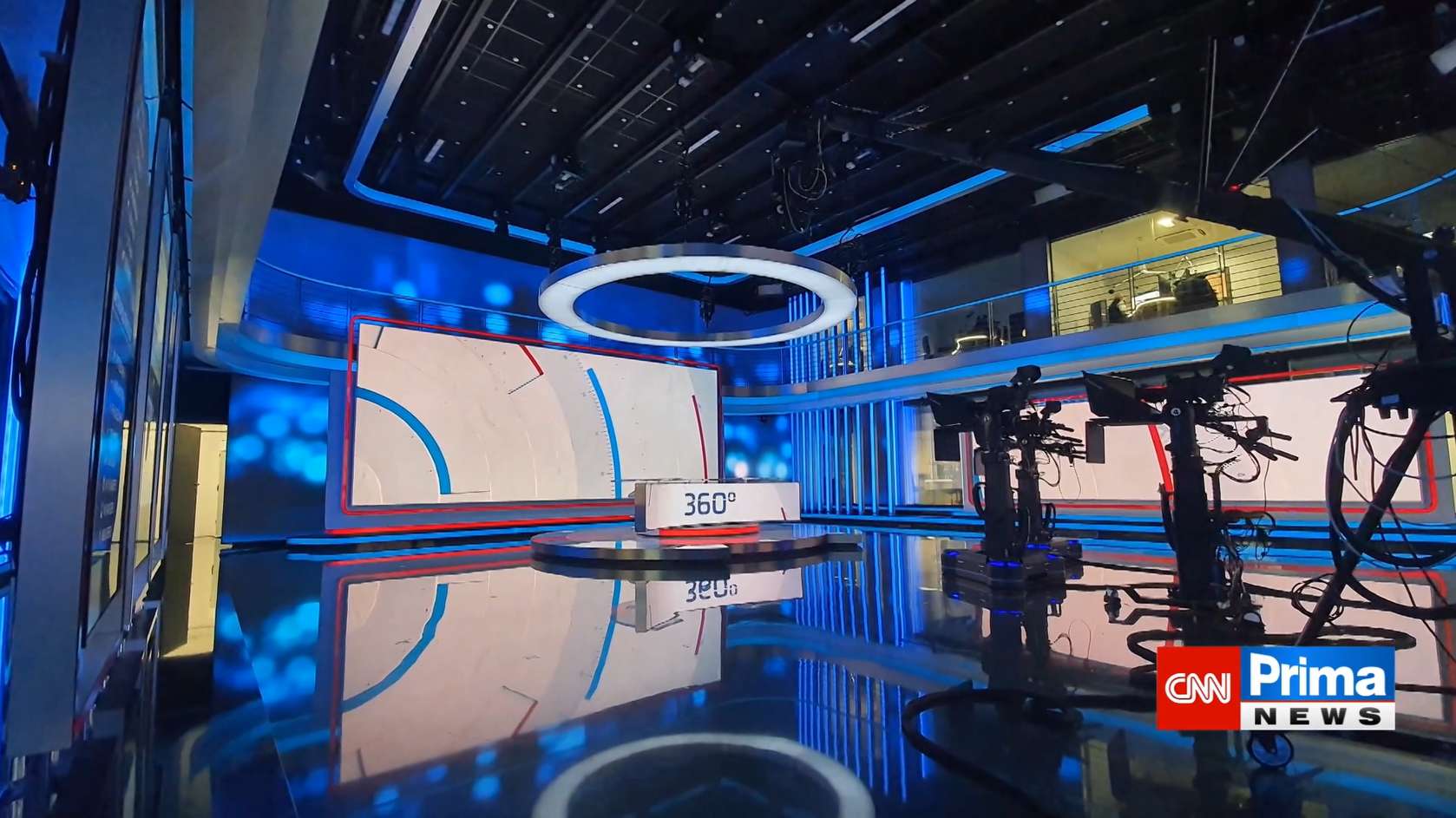
Prima is one of the top three TV networks in the Czech Republic. In 2019 they launched a brand-new 24-hour news channel under the CNN brand — CNN Prima News. To match that global name, they needed a studio that looked the part on camera.
This was the first two-floor TV studio we ever worked on. The project combined two separate technologies under one roof: digital addressable LED strips running through the set decorations, and a massive P10 LED panel wall covering 120 square metres of background.
1,400 Metres of Addressable RGB LED Strips #
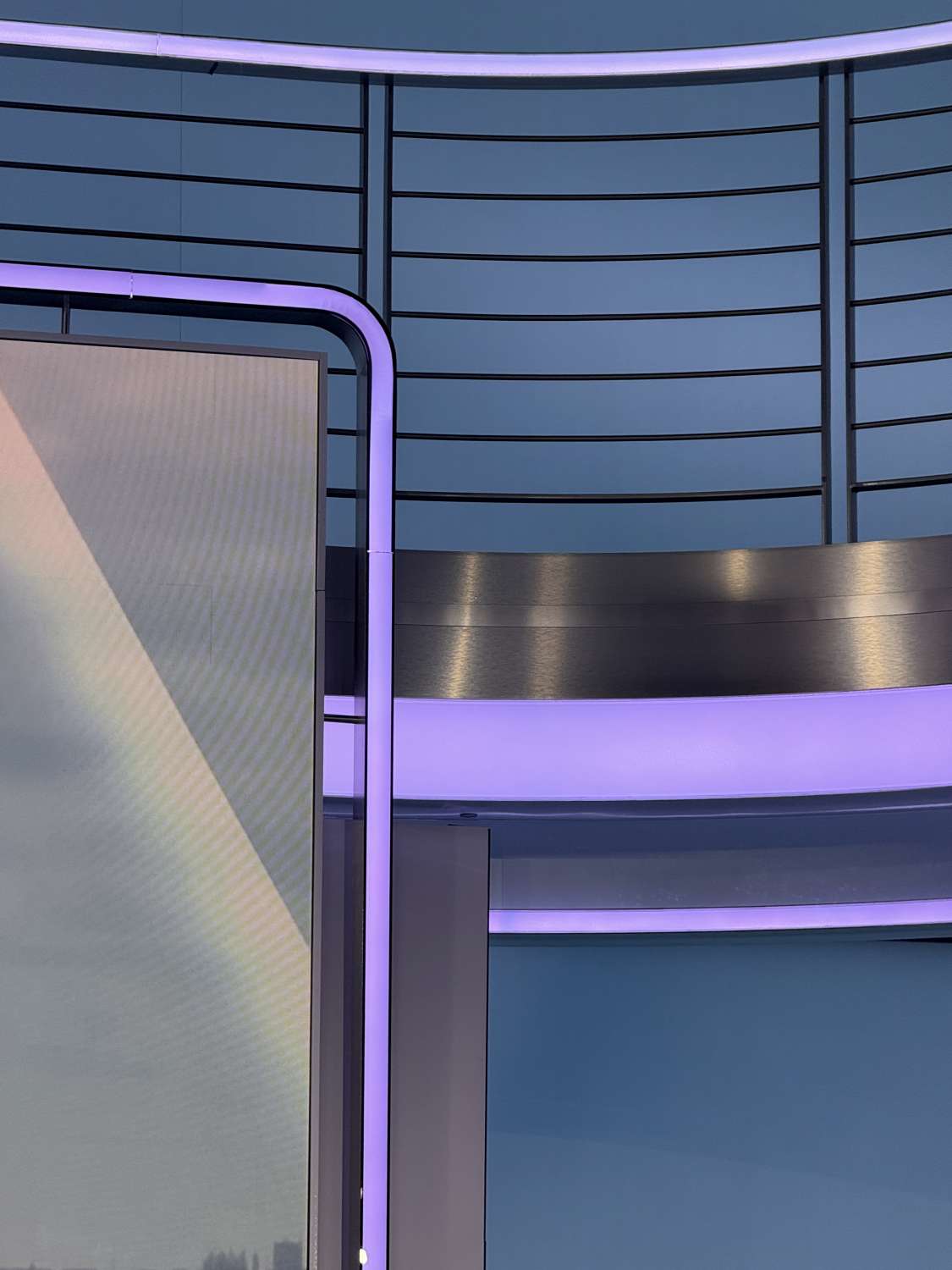
Every piece of decoration in the studio is trimmed with digital LED strips — corners, frames, desk edges, columns. The total length came out to more than 1,400 metres of addressable LED pixel strip installed across two floors.
Why Dark Plexiglass? #
The architect wanted CNN’s signature red to pop on camera. To achieve that, they chose a dark tinted plexiglass as the diffuser instead of the usual white frosted cover.
You might wonder: why use dark plexiglass if it blocks light and forces you to run more LEDs? The answer is color purity. A white matte diffuser shifts every color toward white, which washes out saturated tones. CNN red looks vivid and punchy behind dark plexiglass. Some sections of the set needed a doubled strip — two RGB pixel strips stacked side by side — to push enough brightness through the dark cover and look clean on a broadcast camera.
RGBW Strips and the Full Renovation #
The first phase of the installation used SK6812 RGBW strips. Unfortunately, those strips had a manufacturing defect in the LED chips themselves. The result: we had to strip out and redo the entire studio from scratch.
For the replacement, we switched to standard RGB pixel strips — a proven IC type with a solid track record. Those strips have been running every single day for more than five years now without any issues.
26 LEC3 Controllers #
The full 1,400m pixel LED installation is driven by 26 LEC3 LED Ethernet controllers, each converting video data to SPI signal for the pixel strips. All 26 units run from a central LED Strip Studio workstation.
During this installation we discovered a firmware bug in the LEC3: after exactly 36 days of continuous uptime, the device’s internal memory would fill up and the unit needed a manual restart. We reported the issue and it was fixed in a later firmware version. Current LEC3 units can run all year without ever being powered off — which matters a lot for a live 24-hour news operation.
120 m² P10 LED Background Wall #
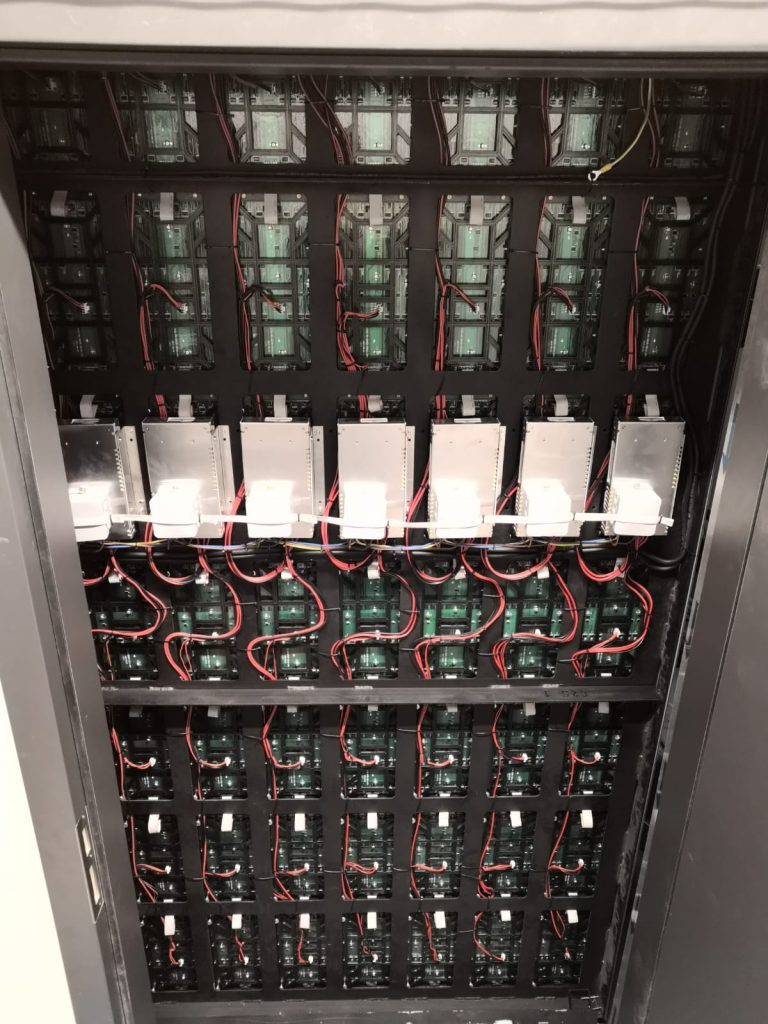
The client wanted a high-resolution background large enough to display live footage — maps, graphics, video clips — relevant to whatever story was on air at the moment. The requirement was 120 square metres of usable projection surface.
We built it from P10 LED panels, each measuring 32 × 16 cm. P10 was the right choice for several reasons. The panel size gave us enough resolution for a background that looks sharp on a broadcast camera. More importantly, the individual panel format let us curve the wall around the studio corners — something you simply cannot do with a rigid flat screen.
The entire 120 m² surface is addressed as a single 4K resolution canvas inside the control room. That canvas is split across multiple sender boxes. The production team can push any live source — news graphics, location backgrounds, full-motion video — directly to the wall in real time.
Power supplies for the LED panels also use an on-switch delay device called an AC delay. This prevents the breakers from tripping when all the power supplies start simultaneously.
Reliability Over 7 Years #
In seven years of daily use, the studio has replaced exactly one P10 LED panel. That single data point says a lot about why P10 is our recommended technology for large-scale TV studio backgrounds. Lower ongoing maintenance means fewer interruptions to a 24-hour broadcast operation.
What This Installation Proved #
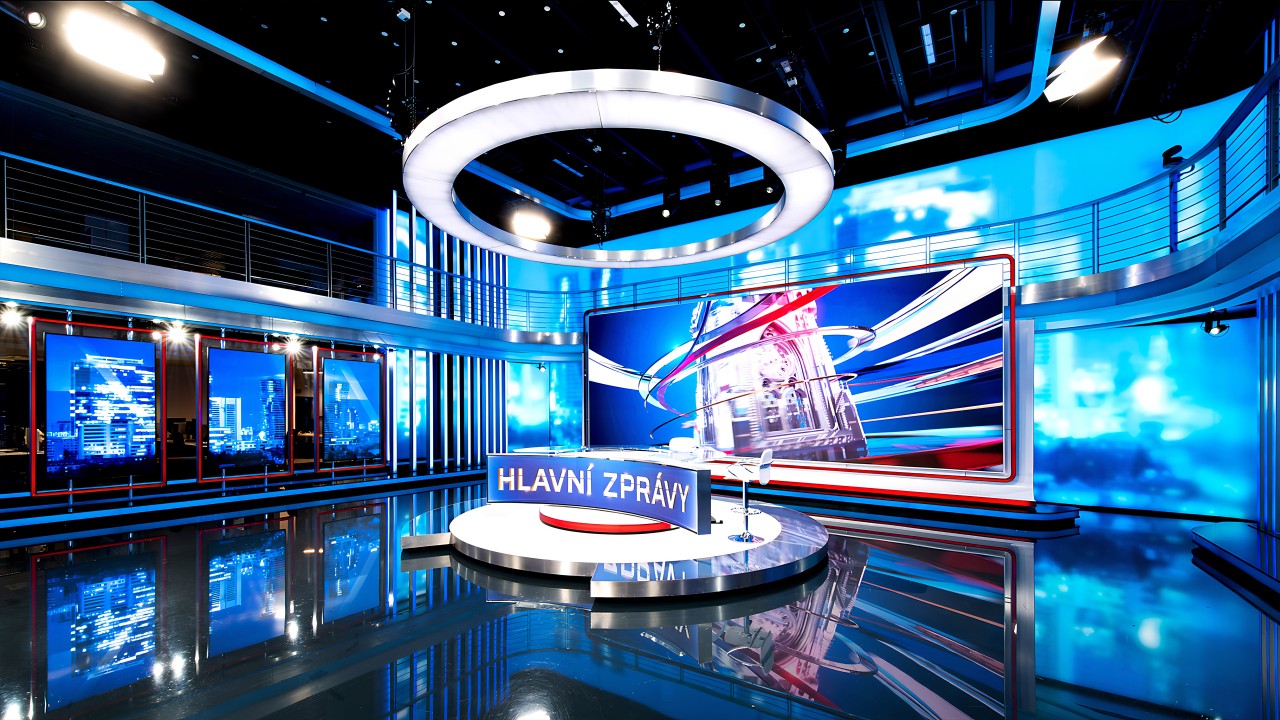
CNN Prima News became a reference point for professional LED pixel installation in Central European broadcast. The project showed that addressable LED strips and modular LED panel walls can coexist in a single studio, each doing what traditional static fixtures never could — continuous color changes, animated backgrounds, and completely different visual identities for different shows with no physical set changes.
The 26 LEC3 Art-Net pixel controllers and LED Strip Studio software give the production team full creative control without needing a dedicated lighting programmer on set every day. For a live news studio, that kind of operational simplicity is just as important as the visual result.
Frequently Asked Questions #
Why use dark plexiglass as a diffuser instead of white frosted plastic?
White diffusers are brighter but they shift all colors toward white. For a studio where red is the primary brand color, dark plexiglass keeps the red saturated and vivid on camera. The trade-off is lower overall brightness, which was solved by doubling the LED strips in the sections that needed it.
What caused the RGBW strip failure and how was it fixed?
The first installation used SK6812 RGBW strips that had a manufacturing defect directly in the LED chips. The entire studio had to be stripped out and re-done. We replaced them with standard RGB pixel strips from a supplier with a verified track record — those have been running without failure for over five years.
What is the LEC3 and how many were needed for 1,400m of LED strips?
The LEC3 is an Art-Net LED Ethernet controller that converts Art-Net network data into SPI pixel signals for addressable LED strips. For this installation, 26 LEC3 units were deployed across both floors to cover all 1,400 metres of pixel strip.
Why were P10 LED panels chosen for the 120 m² background wall?
P10 panels (32 × 16 cm each) offer enough pixel density for a broadcast-quality background while remaining flexible enough to curve around studio corners. They are also extremely reliable — only one panel was replaced in seven years of daily use.
How is the 120 m² LED wall controlled?
The entire wall is addressed as a single 4K canvas in the control room, split across multiple sender boxes. The production team can feed any live video source — maps, graphics, or full-motion footage — directly to the wall in real time without any extra rendering hardware.
How do you avoid voltage drop across 1,400m of LED strips?
Voltage drop is unavoidable over long cable runs — resistance in the copper conductors reduces voltage at the far end of the strip, causing visible brightness loss. The solution is power injection at regular intervals throughout the entire run, so every section of the digital LED strip receives full operating voltage regardless of how far it sits from the main power supply.