
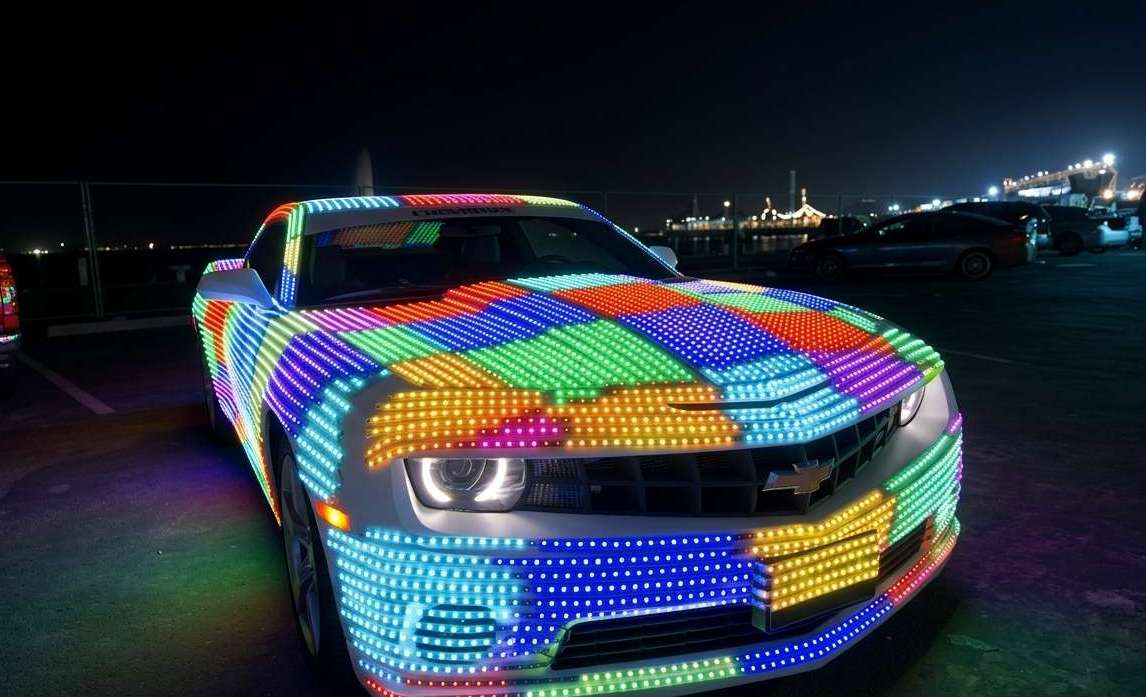
Bring Your Craziest Lighting Ideas to Life with Pixel-Perfect Precision. #
Are you looking to transform your club, commercial space, or architectural facade into an unforgettable visual experience? Addressable pixel LEDs have revolutionized the lighting industry, allowing for dynamic, high-resolution effects where every single LED can be controlled individually.
Moving from a creative concept to a flawless, 24/7-reliable installation requires professional expertise. If you have never worked with an LED pixel installation provider before, here is a typical step-by-step walkthrough of how a client collaborates with us to bring their vision to life.
Step 1: Initial Inspection and Interview #
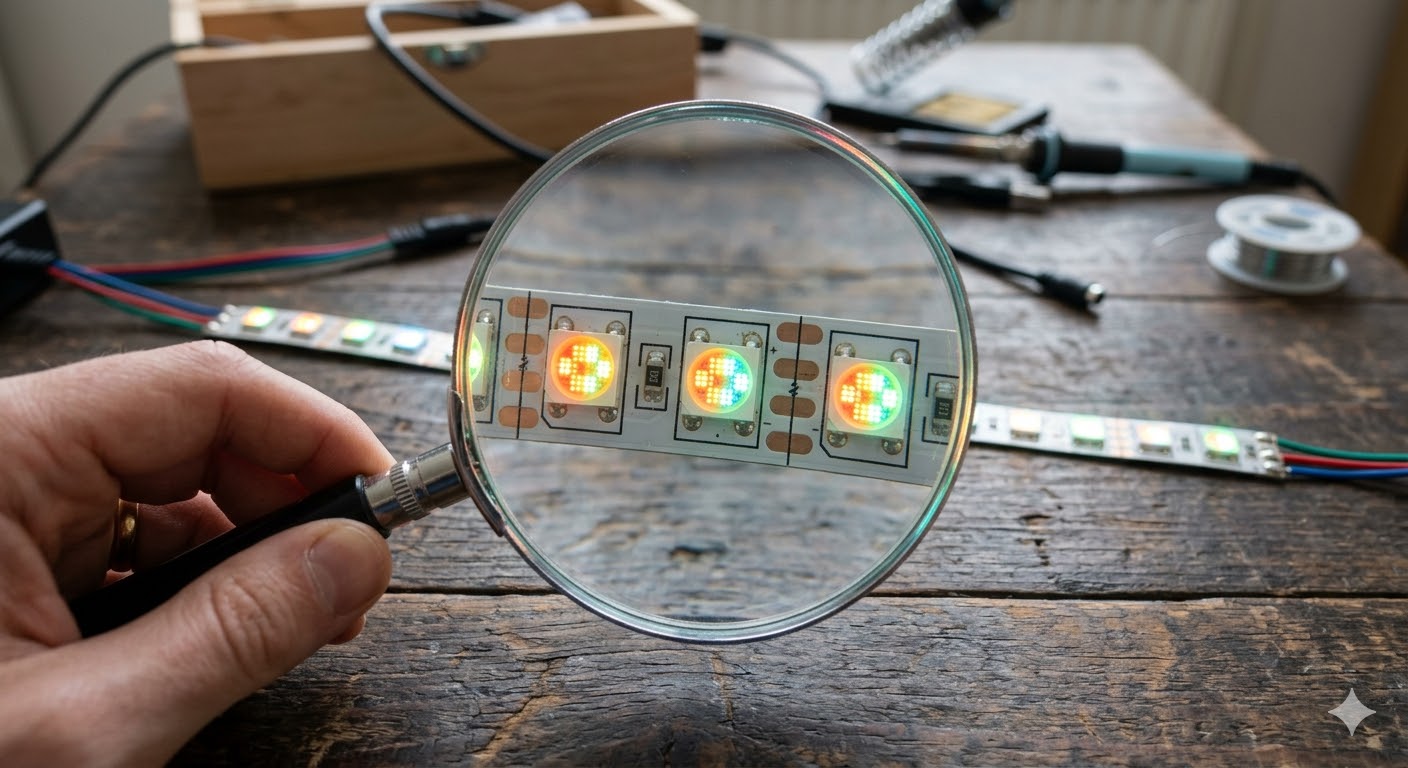
Every successful LED installation starts with a thorough assessment. We begin by visiting (or remotely evaluating) the physical site and talking through your specific goals and requirements.
During this phase we seek to understand the full context of the space — whether it is an immersive nightclub, a smart building facade, or a live TV studio. This initial interview helps us fully understand project constraints, creative ambitions, and budget boundaries, and sets the stage for a successful LED installation.
Step 2: Design and Visualisation #
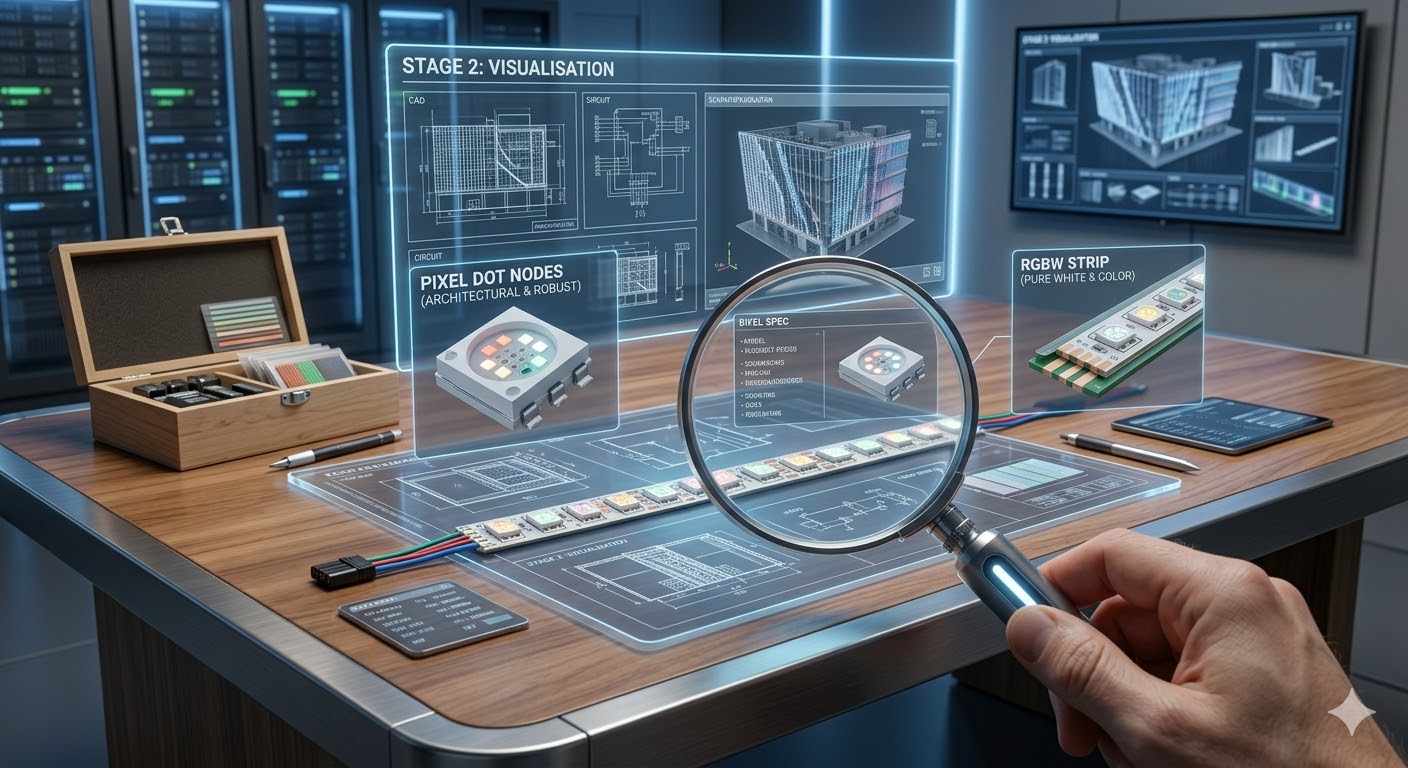
Once the goals are set, the design journey begins. We often recommend hiring a dedicated designer (or we can use our in-house team) who will provide essential plans, schematics, and computer visualizations for your LED installation project.
Choosing the Fixtures: Based on the design, you will decide between:
- Flexible pixel LED strips — ideal for smooth, continuous lines and tight-radius curves
- Pixel dot lights (nodes) — better suited for long-distance viewing and robust, weatherproof architectural builds
Color Configurations: You will choose between:
- RGB (Red, Green, Blue) — for high-impact, fully saturated colorful effects
- RGBW (with a dedicated white diode) — when your project requires pure, high-quality white light for architectural accents
- Strange Color Channels - we use also specialized pixel LEDs using less than 3 channels (even 1) - perfect for single or two color displays, e.g. using Edison light bulbs
Step 3: Technical Planning and Sourcing #
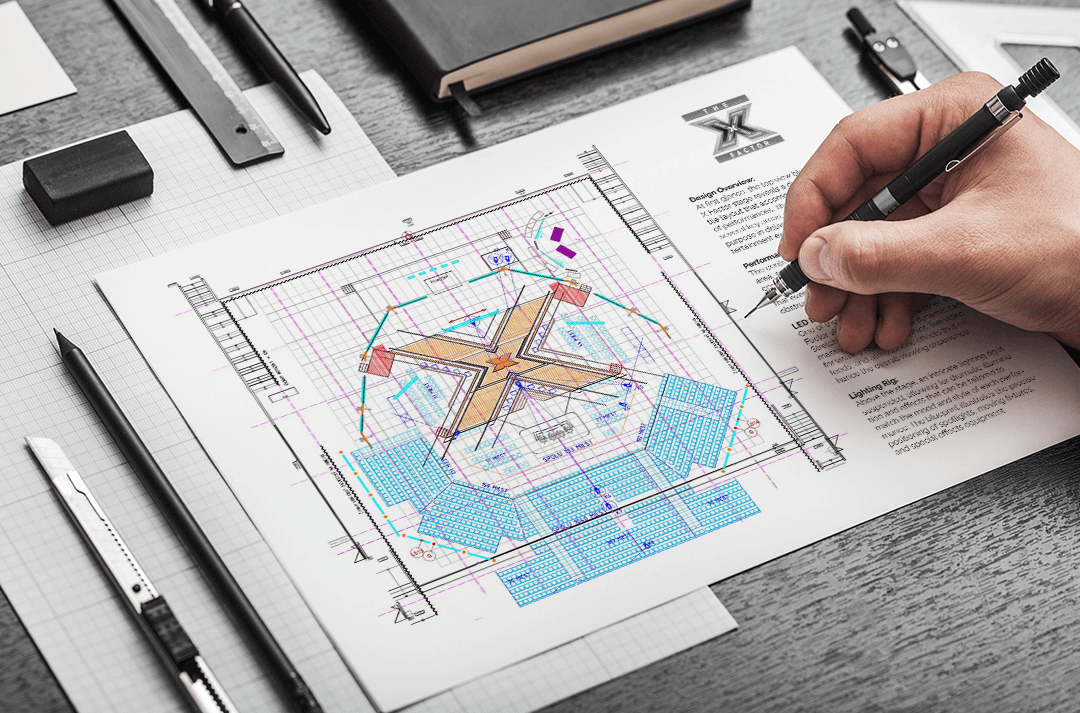
Addressable lighting requires far more than plugging in a lightbulb. During this phase we work closely with you to determine the best technical backbone for your project. This includes:
Hardware Selection: Assessing the exact number of power supplies, LED strips, and pixel controllers needed for your scale. For large venues we plan how to transmit data over long distances using specialized equipment — such as differential signal transmitters — that can carry pixel data hundreds of metres over standard network cables without signal corruption.
Control Options: Deciding how your LED installation will be operated on a daily basis. Options range from:
- Fully automated standalone modes running from an SD card
- Smartphone apps
- Lighting consoles via DMX, Art-Net, or sACN
- Dedicated media servers for video-mapped content
Cost Estimate and Timelines: Establishing a realistic project timeline, ensuring timely delivery of materials, and providing a comprehensive cost estimate so there are no unexpected surprises.
Step 4: Realization and Physical Installation #
This is where your vision physically takes shape. Depending on your preference, you can choose whether our specialized team handles the physical installation, or whether you use a trusted local contractor under our remote guidance. The installation process involves physically securing fixtures and controllers, which may include using DIN-rail mounting for organized control cabinets or deploying IP67-rated waterproof enclosures and conformal-coated hardware for outdoor elements exposed to harsh weather
Throughout the process, technicians ensure that all hardware and cables are safely locked in place and adhere to strict electrical safety codes
During realization, technicians manage complex wiring and networking tasks such as:
- Power injection to prevent voltage drop across long LED runs: As electricity travels down an LED strip, resistance causes the voltage to drop, which can lead to LEDs at the far end dimming or shifting in color (often turning pink)
- To prevent this, technicians calculate the current draw and inject power at regular intervals, making sure to use properly gauged cables and ensuring that the positive (+V) outputs from different power supplies are never bridged together, while maintaining a common ground
- Overcoming data distance limitations: Standard pixel data signals can typically only travel about 3 meters before the signal degrades and causes flickering
- For larger venues, technicians implement specialized long-range transmission systems that convert the data into a balanced differential signal. This allows the data to travel flawlessly for up to 300 meters or more over standard shielded Cat5/Cat6 network cables
- Advanced network configuration: To ensure all pixel controllers communicate seamlessly without lag or timing issues, technicians design robust local networks, often utilizing Gigabit Ethernet speeds and daisy-chaining devices with redundant network loops for reliability
- Frame-perfect synchronization: Finally, technicians configure synchronization protocols like Art-Sync or sACN Sync across the network. This guarantees that every single pixel across multiple controllers updates at the exact same millisecond, eliminating visual “tearing” and ensuring a fluid, broadcast-quality display
Step 5: Pixel Mapping, Programming, and Training #
The final — and most exciting — step is bringing the hardware to life using pixel mapping software.
Mapping the Display: Using advanced 2D or 3D pixel mapping software, we plot a digital replica of your physical installation on screen. This ensures that when an animation or video is played, it translates perfectly across the complex geometry of your physical LED fixtures.
Content Creation: Whether you want to route live video, trigger sound-to-light audio reactions, or play pre-rendered visual effects, the software setup is tailored to your venue’s vibe and workflow.
Client Training: For projects utilizing proprietary control software, we provide specialized training for your staff on how to map and control effects. This ensures your team can easily change the mood of the room, trigger playlists, or update content long after the installers have left.
Ready to Start Your Project? #
Partnering with a professional LED pixel provider ensures your installation is not only visually breathtaking but also engineered for long-term safety and reliability. Reach out today to book a consultation and take the first step toward a brilliant installation.