

Project Quick Facts
The Stage That Nearly Broke the Rules #
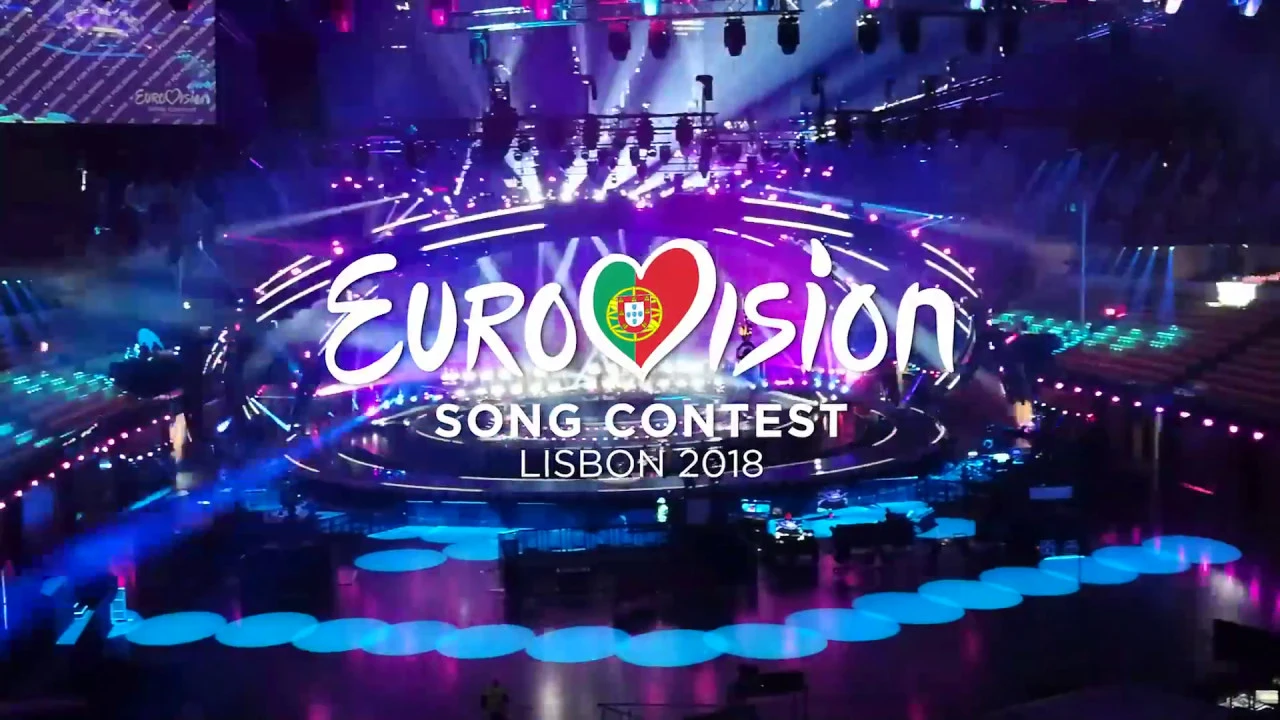
The Eurovision Song Contest 2018 stage in Lisbon was designed to be something extraordinary. The set architect planned two main features that made it unlike anything seen at Eurovision before: a row of massive moving LED ribs rising up from the back of the stage, and a sweeping arc that stretched all the way forward toward the audience. Both structures were covered in pixel LED strips from end to end.
The scale was not small. The full stage used over 4.5 kilometres of SK6812 5V addressable pixel LED strip, adding up to more than 250,000 individual RGB LED pixels. Every pixel independently controlled. Every pixel part of a live video feed from the broadcast.
Why Art-Net Was Not Enough #
Here is where things got interesting — and stressful.
Art-Net is the standard protocol used to control large pixel LED installations over an Ethernet network. It works well for most professional setups. But Art-Net has a hard limit on how much data it can carry per universe: 512 channels, which translates to 170 RGB pixels per universe. To cover 250,000 pixels, you would need nearly 1,500 Art-Net universes running simultaneously — and that is simply more data than a standard Art-Net signal chain can push reliably.
This was discovered during rehearsals. If you have ever been on a major live show production and had your entire LED system fail during a run-through, you understand the pressure that creates. Rehearsals for Eurovision run for more than a week before the live broadcast, so there was time to fix it — but not much.
The Solution: HDMI Grabber and a Custom Software Build #
The approach that solved the problem was a combination of hardware and a custom version of LED Strip Studio software.
Instead of sending pixel data over Art-Net from a media server, the decision was made to use an Intensity PRO HDMI grabber card as the video source. This is the same approach we have used on other large installations — the Intensity PRO captures the broadcast video signal in real time and feeds it directly into LED Strip Studio, which then handles the pixel mapping and outputs the result over SPI to the LEC3 LED controllers scattered across the stage.
The client had one firm requirement: the rendering had to run at more than 50 frames per second. For 250,000 pixels, that is a lot of computation per frame.
To hit that target, we built a special version of LED Strip Studio specifically for this installation. It disabled all visualisation previews, all on-screen rendering, all non-essential processing — everything that takes CPU time but is not actually needed when you are pushing live data to a fixed installation. The software kept only the mapping engine and the HDMI grabber input, sending frames as fast as possible directly to the LEC3 controllers on the stage network.
Remote Development, Live Testing #
All of this development happened remotely. Our team in Bratislava, Slovakia was writing and testing new software builds. Each version was sent to the production team in Lisbon, who installed it on the system and tested it live — on the actual stage, with all 250,000 pixels running.
That loop — build, send, test, report back, fix, repeat — ran across several iterations during the rehearsal period. Not the most comfortable way to develop software, but it worked. By the time the live shows began, the system was running at a smooth, stable frame rate across the full pixel LED installation.
The Result on Stage #
The best way to see what this installation looked like in practice is to watch the performance by Mikuláš Josef – Lie to Me, where the moving LED ribs in particular create an effect that is immediately visible. The huge LED segments animate in sync with the broadcast video, with each artist’s performance giving the LED system a completely different look and feel.
The installation pushed LED Strip Studio in ways no previous project had. Controlling hundreds of thousands of pixels reliably at broadcast frame rates required improvements to the core of the software that benefited every project that came after. Eurovision 2018 was the proof that addressable LED pixel installations at this scale — with live HDMI video input — are not only possible, but production-ready.
Frequently Asked Questions #
How many pixels can one Art-Net universe control?
One Art-Net universe carries 512 DMX channels. For RGB pixels, that is 170 pixels per universe (3 channels each). For RGBW pixels like SK6812, it is 128 pixels per universe (4 channels each). A 250,000-pixel installation like Eurovision 2018 would need nearly 1,500 Art-Net universes simultaneously — which is why a direct HDMI grabber approach was used instead, bypassing Art-Net entirely and sending video frames straight to the LEC3 controllers over SPI.
How to stream HDMI video to pixel LEDs?
You need an HDMI capture card (such as the Blackmagic Intensity PRO) connected to a computer running pixel mapping software like LED Strip Studio. The software captures the incoming video frame, maps it to the physical layout of your LED strips using a 2D pixel map, and outputs the result over SPI to your LED controllers. The pixel LED controller then sends the SPI signal to the strips. This approach is faster and more reliable than routing broadcast video through an Art-Net media server for very large installations.
What is the difference between WS2812B and SK6812?
WS2812B is an RGB pixel strip — each pixel has three channels: red, green, blue. SK6812 adds a fourth channel: a dedicated white LED (RGBW). The white channel produces cleaner whites and more accurate pastels than mixing RGB alone. Both strips use the same SPI-style one-wire protocol, so most LED controllers support both. For the Eurovision 2018 stage, SK6812 5V strips were used across all 4.5 kilometres of installation.
How do you synchronise hundreds of LED controllers across a large stage?
All LEC3 controllers are connected over a standard Ethernet network. LED Strip Studio assigns each controller a specific range of pixels in the pixel map and pushes frames to all controllers simultaneously via the network. The software handles the timing so all controllers update in sync. For very large installations, it is important to have a clean, fast network and to minimise any non-essential CPU load on the control PC — which is why the Eurovision build disabled all visualisation previews.
Why was a custom version of LED Strip Studio needed for this installation?
The client required over 50 frames per second across 250,000+ pixels. Standard LED Strip Studio includes on-screen visualisation, preview windows, and other tools that are useful during setup but consume CPU time during live operation. For Eurovision, a special build was created that stripped all of that out and ran only the pixel mapping engine and HDMI grabber input. This freed enough CPU headroom to achieve the required frame rate reliably, even with the full pixel count active.
Is it possible to run a large pixel LED installation without Art-Net?
Yes — and for very large installations it is sometimes the better choice. Art-Net has a practical ceiling on how much data it can carry before latency or reliability become issues. An alternative is to use an HDMI video source captured by a grabber card, with the pixel mapping software converting video frames directly to SPI output for the LED controllers. This bypasses the Art-Net data limit entirely. The Eurovision 2018 installation used exactly this approach — Intensity PRO grabber card feeding LED Strip Studio, outputting to LEC3 controllers over SPI — to control 250,000+ pixels at broadcast frame rates.