
Project Quick Facts
Some places have great bones — interesting architecture, a loyal crowd, a real sense of identity. But without the right lighting, none of that comes through. That was the situation at Rio, one of Bratislava’s best-known venues in the city center.
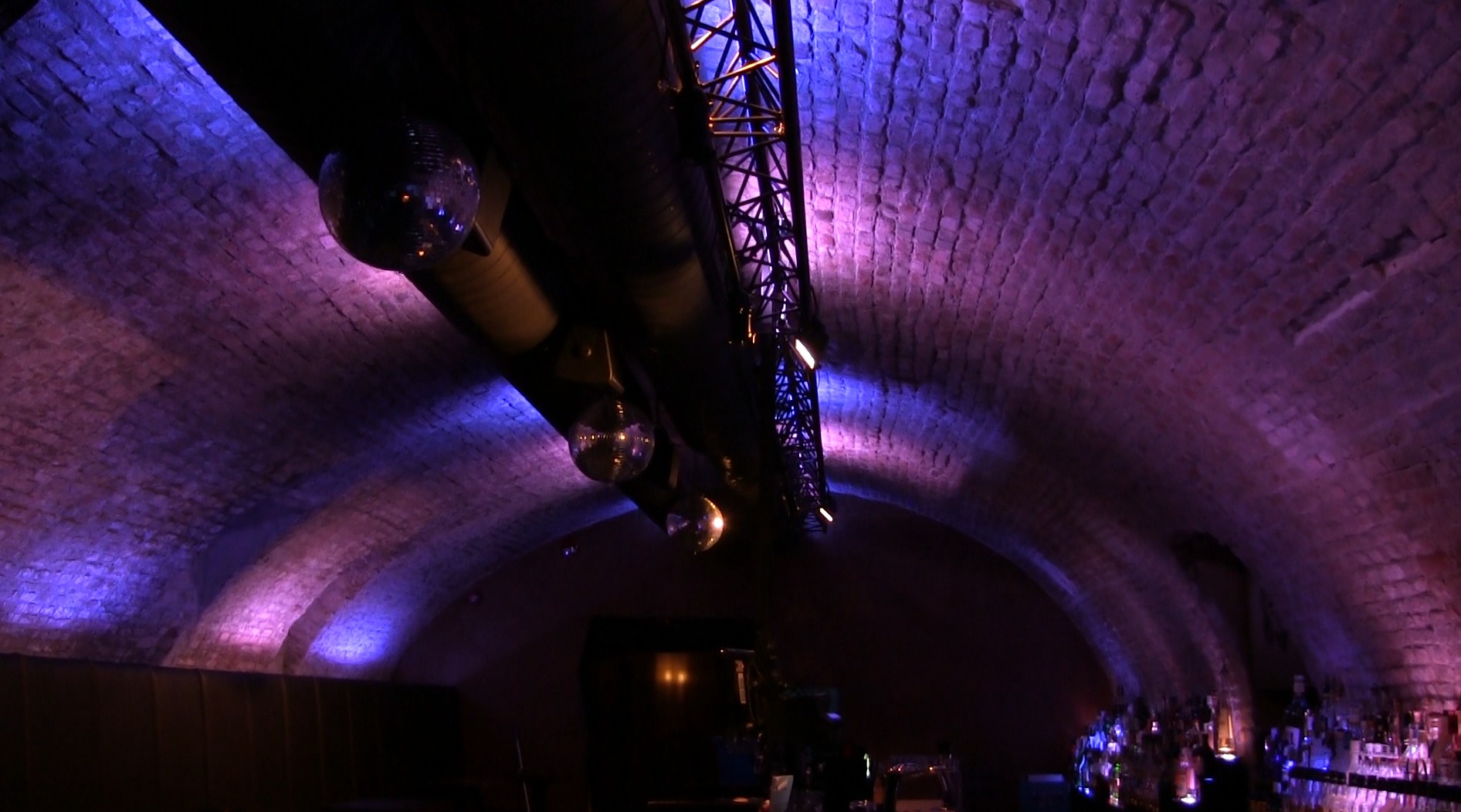
Rio is famous for its food and as a go-to starting point for a night out. Downstairs, though, there’s a long underground space that wasn’t living up to its potential. The conventional fixtures were functional, but the room felt heavy and cave-like. The geometry — a long, narrow basement with brick walls and an arched ceiling over the DJ booth — was working against the atmosphere instead of for it.
The client wanted a change. So we came in with addressable LED pixel strips and a plan to make the room breathe.
Why Pixel LED Strips Work So Well in Long Narrow Spaces #
The elongated shape of the Rio basement is actually an asset — if you light it right. Digital LED strips running along the ceiling and following the bar and seating create a visual line that pulls your eye from the entrance all the way to the back of the room.
We ran the addressable LED strip installation across the ceiling and along both the bar counter and seating edges. The effect is immediate: the room stops feeling like a tunnel and starts feeling like a destination. The length of the space becomes the feature instead of the problem.
The real impact shows up in the effects. With LED pixel mapping software, the operator can program a scene where the entire room lights up progressively — starting at the front door and traveling back toward the DJ booth. That single effect communicates the full depth of the space every time it runs. It sets the energy before the first track even drops.
Brick Walls and Indirect Color Light #
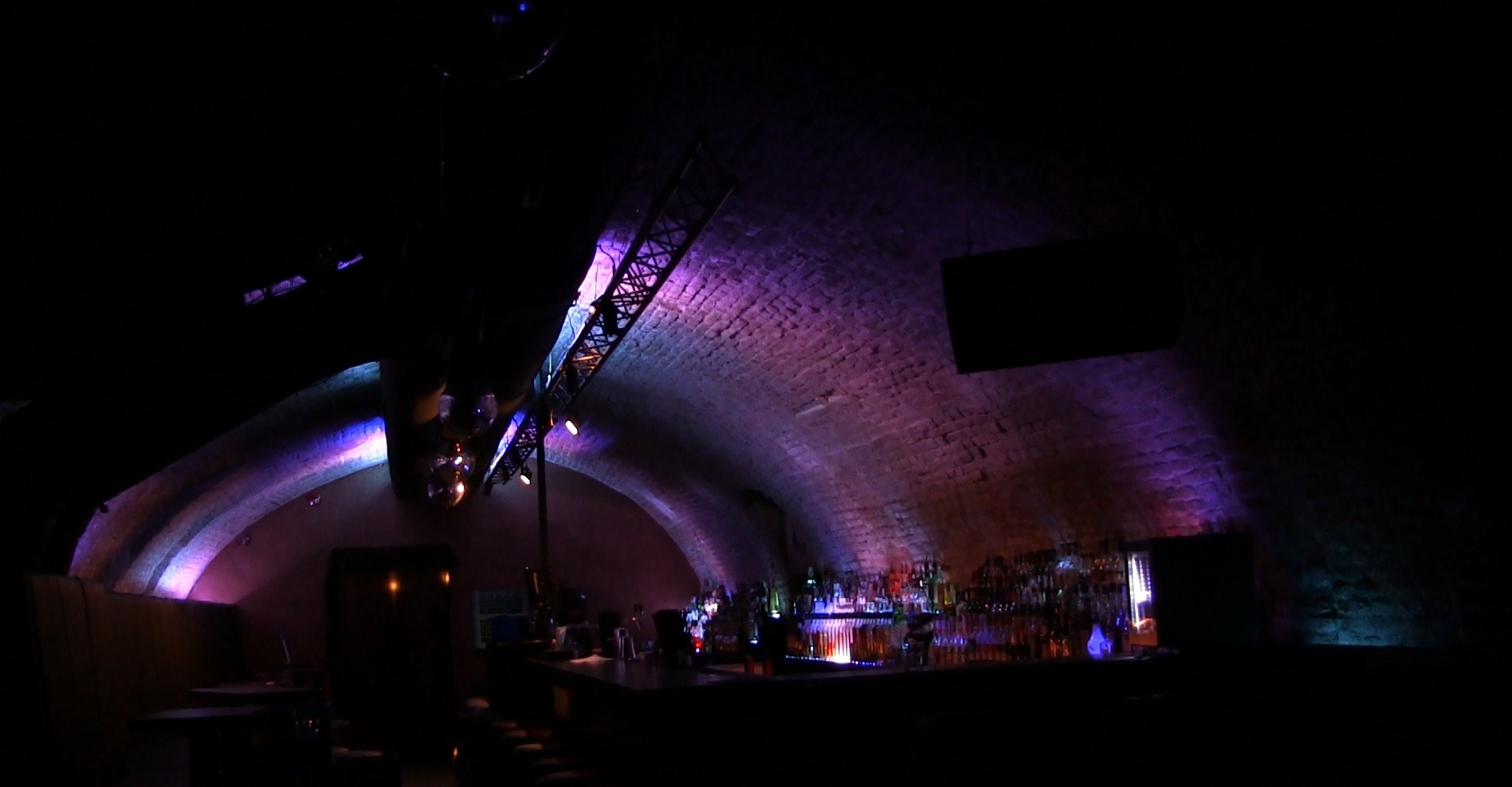
The walls at Rio are exposed brick. Under flat white light, they look unremarkable. Under colored indirect light from the LED pixel installation, they look incredible.
The rough texture of brick plays beautifully with colored light — shadows fall differently depending on angle and color, so the wall surface takes on depth and dimension that you simply can’t achieve with conventional fixtures. Warm reds turn the wall dramatic and intimate. Cool blues make it feel deep and modern. The operator has a full palette to work with depending on the time of night or the style of the event.
Indirect lighting from the addressable LED controller running the strip installation does this automatically — no dedicated architectural fixtures needed. The strips positioned along the ceiling perimeter wash the walls from above with whatever color the show demands.
The Custom Arched LED Panel Behind the DJ Booth #
The back wall at Rio presented a specific challenge. The DJ booth sits directly under an arched ceiling, which means there’s no flat rectangular surface to mount a standard LED pixel wall or flat panel against. Regular LED walls are built for flat geometry — curved arches break the math.
So we built a custom solution: an arched LED pixel panel shaped to follow the curve of the ceiling, fabricated specifically for that corner. The panel is made from addressable LED pixel strips mounted on a curved frame, covered with diffusion material to blend the individual pixel points into a smooth surface.
Because each pixel is individually controllable via the Art-Net LED controller, the effects on the custom panel sync perfectly with the rest of the room. The arched backdrop behind the DJ becomes part of the same visual canvas as the ceiling and bar runs — the whole space moves together.
This is exactly the type of problem that pixel LED technology solves. LED pixel mapping software doesn’t care what shape your surface is. It maps pixels to physical positions, so a curved arch is just as easy to program as a straight line.
The Outcome #
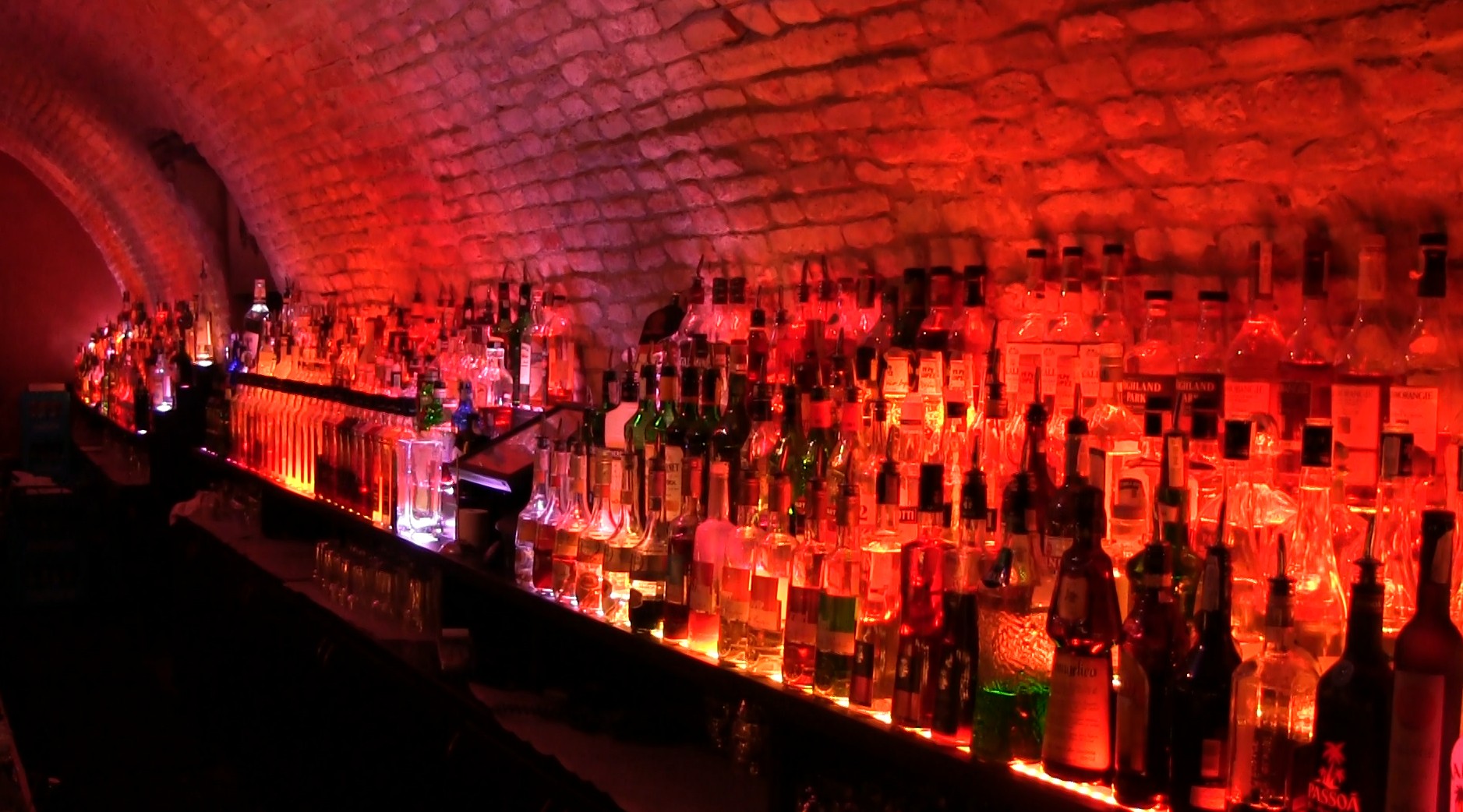
The Rio basement is now one of the most visually engaging underground bar spaces in Bratislava. The LED pixel installation works on every level: it flatters the architecture, it gives the operator creative control across the full range of moods a venue needs, and it makes the long narrow layout feel like a deliberate design choice instead of a limitation.
Pixel LED strips are the right tool for elongated spaces. They emphasize depth, they work on irregular surfaces, and they deliver effects that conventional lighting physically cannot.
Frequently Asked Questions #
Why are pixel LED strips better than conventional lighting for long, narrow bars?
Addressable LED pixel strips can run effects that travel the full length of a space — lighting up section by section from front to back. This makes the elongated shape a feature rather than a problem. Conventional fixtures light everything at once with no sense of direction or movement. Pixel strips let the operator use the geometry of the room as part of the show.
What is an addressable LED strip and how is it different from a regular one?
An addressable (or digital) LED strip has individual control chips — like WS2811 or WS2812B ICs — embedded at regular intervals along the strip. Each LED or small group of LEDs can be set to a completely different color and brightness independently. A regular analog LED strip changes all LEDs at once to the same color. For dynamic effects and pixel mapping, addressable strips are the only option.
How do you light brick walls effectively with LED strips?
Indirect lighting works best — the strip is positioned so light washes across the brick surface at an angle rather than hitting it head-on. This creates natural shadows in the texture, giving the wall depth and character. Colored light makes this effect even stronger. The rough surface of brick responds very differently to warm vs. cool colors, so the operator has a wide range of moods available just by changing the hue.
Can pixel LED strips be installed on a curved or arched surface?
Yes — this is one of the key advantages of pixel LED technology. The strips are flexible, so they follow curves easily. LED pixel mapping software maps each LED to a position in space, not to a flat grid. That means a curved arch is programmed just like a straight line — the software handles the geometry and effects flow naturally across any shape.
What LED control protocol is used for nightclub and bar installations?
Most professional installations use Art-Net or sACN over an Ethernet network. These protocols allow a single controller or software to drive thousands of individually addressable pixels across multiple universes. DMX is also common, especially for connecting lighting consoles to pixel controllers. Art-Net is the most widely used in clubs and bars because it integrates well with major lighting and VJ software.
How many pixels can one Art-Net universe control?
One Art-Net universe carries 512 DMX channels. For RGB pixels (3 channels each) that gives you 170 pixels per universe. For RGBW pixels (4 channels each) it’s 128 pixels. Larger installations use multiple universes — modern Art-Net LED controllers support 4, 8, or more universes simultaneously, making it straightforward to scale up to thousands of pixels across a venue.