
Project Quick Facts
A Pixel LED Show at 2,000 Meters #
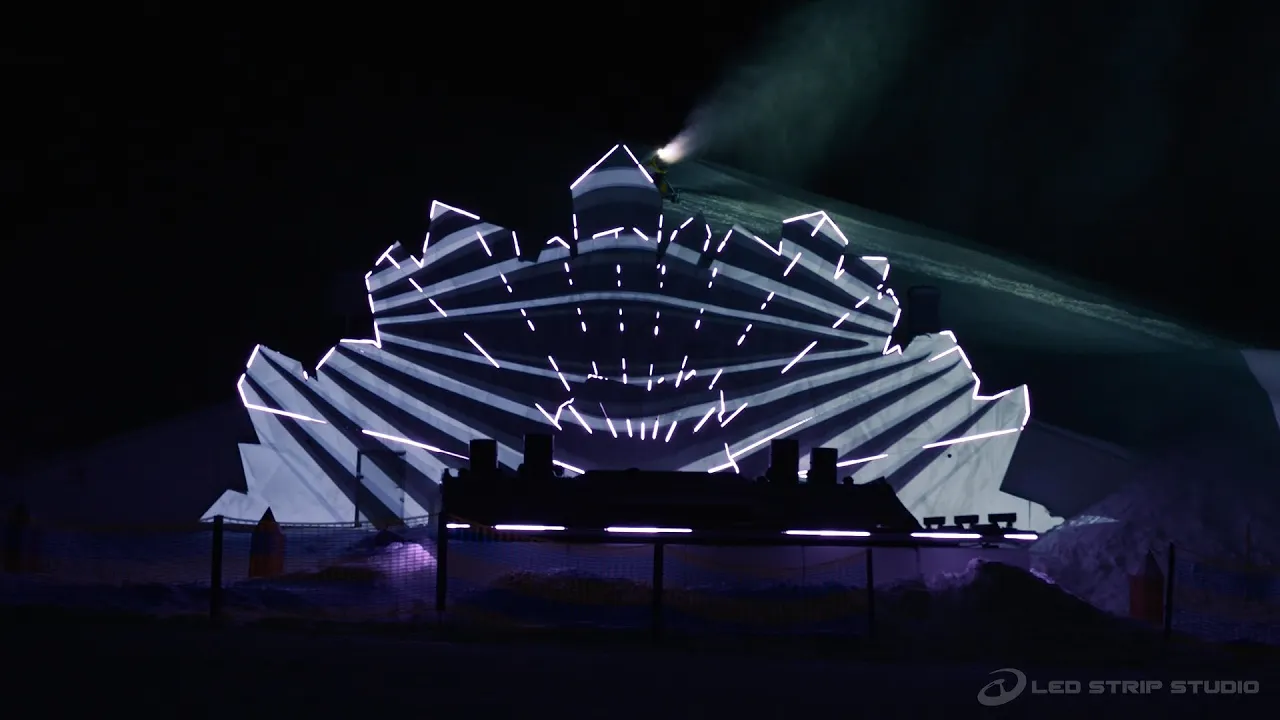
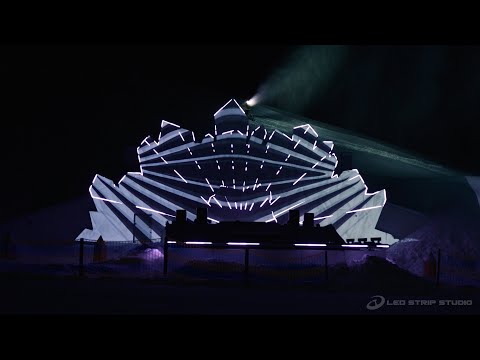
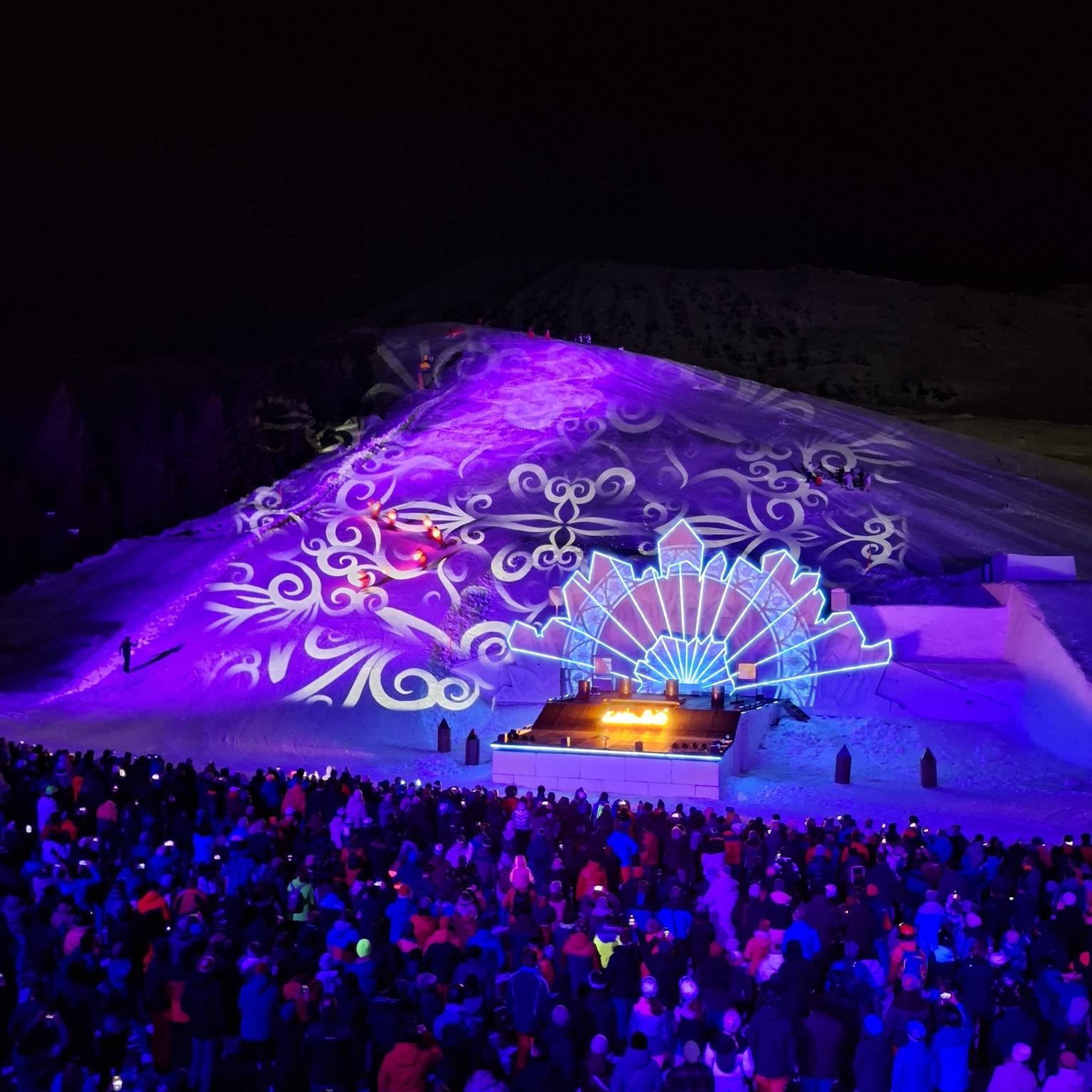
In the summer of 2024, we built a pixel LED installation on a mountain stage in Serfaus-Fiss-Ladis, Austria — roughly 2,000 meters above sea level. The show runs every Wednesday during ski season and pulls in over 2,000 visitors a night.
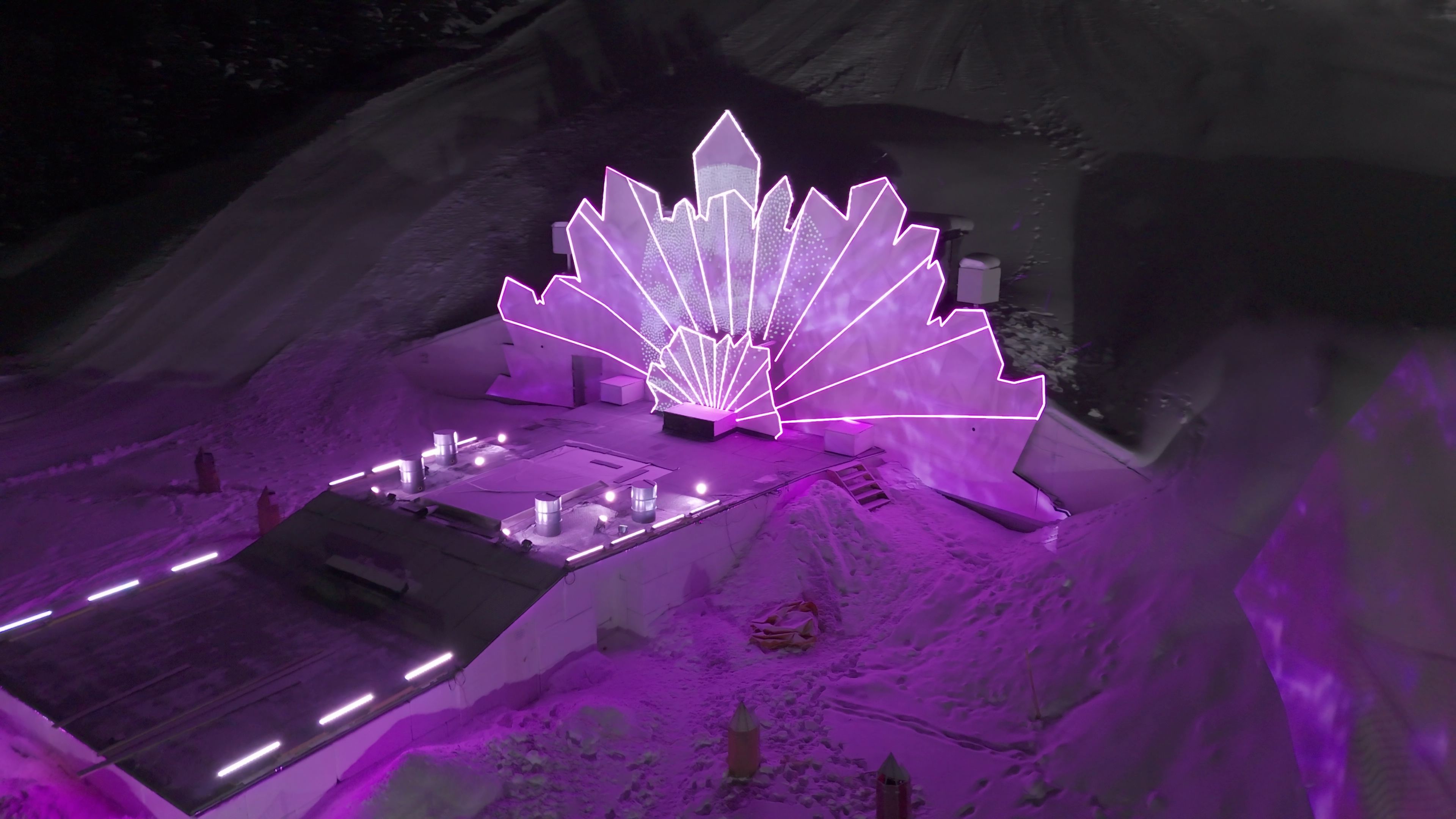
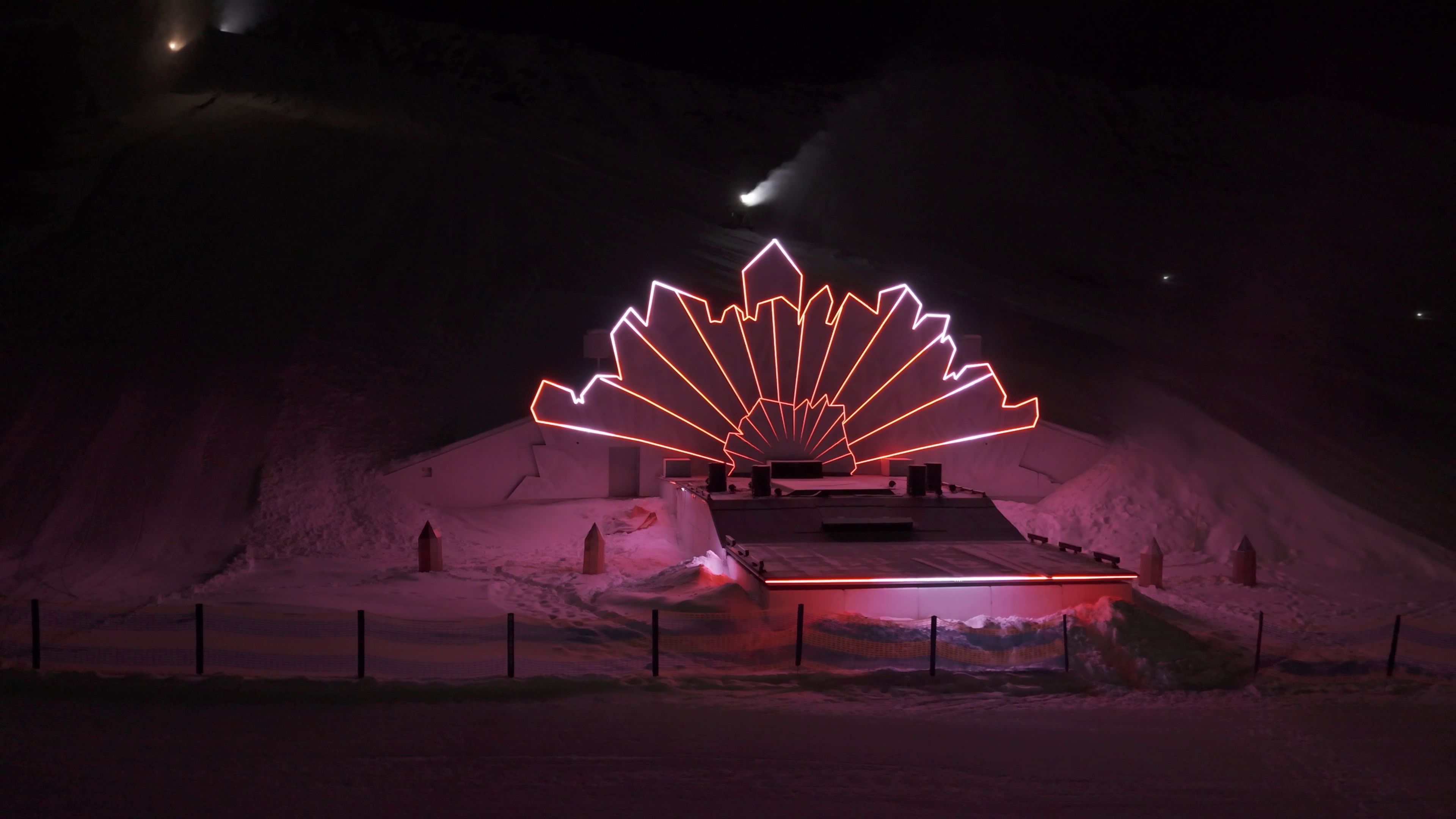
The project had three main parts: two large vertical “crystal” structures covered in addressable LED pixel strips (around 200 meters of strip total), plus a hydraulic moving stage fitted with another 50 meters. All of it runs through five LED Ethernet controllers, each driving 4,096 pixels, connected over a local network back to the front-of-house desk.
Why 12V WS2815 Strips for a Mountain Installation #
The strips run at 12V and use the WS2815 LED strip chip at 60 pixels per meter. At that pixel density and run length, 12V was the obvious choice — voltage drop stays manageable without constant power injection points. Compared to 5V addressable LED strips, the wiring is cleaner and simpler across a large outdoor structure.
But the bigger reason to pick WS2815 specifically was durability. These strips have gold-plated contacts inside the LED package itself. At -20°C, standard LED contacts can become brittle and crack. The gold contacts handle those extremes better and give you a more reliable IP67 LED strip outdoor installation in the long run.
The strips are tucked into aluminum LED profiles and plastic conduit tubes — protection from snow loading and physical contact. The LED pixel controllers live in sealed IP-rated enclosures mounted directly on the structure.
We also made an unusual call: the LEDs run almost continuously, even when there is no active show. Our experience is that digital LED strips actually degrade faster from repeated thermal cycling — heating up and cooling down — than from just staying on at low brightness. Two full seasons in, the installation is proving us right.
Three Installation Phases #
The work was split across three separate trips to the mountain.
Phase 1 — October: Structural work on the crystal frames and all the power runs. The weather was cooperative — it snowed exactly once, dropping about a meter, but conditions were actually pleasant for the work overall.
Phase 2 — Winter: Installing and routing the digital RGB LED strips around the stage structure. No work at height this time, but it was properly cold. Full winter gear the whole time.
Phase 3 — Programming and handover: We programmed three full show versions in LED Strip Studio software and synchronized everything to the music track via MIDI timecode. The hour-long show runs frame-precisely to the soundtrack. We then trained the resort’s own staff so they could launch the show themselves every Wednesday for the rest of the season — and the seasons after that.
LED Costumes for the Skiers #
One extra element we added: LED costumes for skiers. The event stage LED lighting show is coordinated with a live downhill run — the skiers wear pixel LED suits that are programmed and synchronized with the main stage show. It adds a kinetic, moving element to the performance that looks spectacular against the snow and draws the crowd’s eye across the whole mountain face.
The costumes are the one part of the LED pixel installation that needs regular maintenance. Falls happen, fabric stretches, and connectors take stress. The mountain stage itself, with its sealed addressable LED controller enclosures and 12V strip runs? Two full winter seasons with zero issues on the main structure.
Results #
Every Wednesday during ski season, the show attracts more than 2,000 people to the stage for a one-hour visual and music experience. The installation shows that professional outdoor pixel LED installation is completely viable at alpine altitudes — with the right hardware choices and a sensible approach to weatherproofing. When you pick the right WS2815 LED strip type, protect everything in profiles and IP enclosures, and synchronize the whole show through LED Strip Studio with MIDI timecode, the system runs itself.
Frequently Asked Questions #
Why use WS2815 LED strips for a -20°C outdoor mountain installation?
WS2815 strips have gold-plated contacts inside the LED package, which makes them significantly more resistant to cold temperatures and moisture than standard WS2811 or WS2812B strips. At -20°C, cheaper contacts can become brittle and fail. WS2815 also runs at 12V — far less voltage drop than 5V strips across long outdoor runs — which simplifies power distribution and reduces the number of injection points needed.
How do you synchronize a pixel LED show to music at a live event?
This installation uses MIDI timecode (MTC) to lock the LED Strip Studio show timeline to the audio playback system. A timecode signal goes from the music server to the LED pixel controllers over the local Ethernet network. Three different show versions are pre-programmed in LED Strip Studio and triggered via MIDI, so the resort staff can run a full hour-long show reliably with minimal technical knowledge — which was the whole point of the training phase.
How many pixels can one Ethernet LED controller handle?
The LED Ethernet controllers used here each handle 4,096 pixels. With five controllers in the installation, that is more than 20,000 individually addressable pixels spread across the two crystal structures and the hydraulic moving stage. All five controllers connect over a standard local network, with the full signal path running back to the front-of-house desk.
Should LED strips be left on or turned off between shows to last longer?
For permanent outdoor installations in extreme temperatures, running LEDs continuously at low brightness often extends their lifespan compared to repeated on/off cycling. Thermal cycling — heating up and cooling down — stresses solder joints and contacts over time. In this installation, the strips stay on almost constantly throughout the season. After two full winters, this approach has held up: zero failures on the main pixel LED structure.
How do you protect LED strips and controllers from snow and frost?
The strips are installed inside aluminum LED profiles and plastic conduit tubes, which shield them from direct snow contact and mechanical impact. Controllers are in sealed IP-rated enclosures mounted on the structure. All cable entry points are sealed. For any outdoor mountain pixel LED installation, 12V addressable LED strips rated at least IP67 are the minimum — and proper enclosure for every piece of electronics is non-negotiable.
How do LED pixel costumes work in a synchronized ski show?
The LED costumes for the skiers are built from flexible addressable LED strips sewn into performance suits. Each costume has a small onboard controller that stores pre-programmed sequences. The sequences are timed to match the main stage show, so when the music hits a certain point and the stage lights shift, the skiers’ suits change in sync as they come down the slope. Maintenance is needed more often on the costumes than on the stage — physical wear from skiing and occasional falls puts strain on connectors and strip segments that a fixed structure never sees.