

Project Quick Facts
Some clients don’t just build clubs — they build records. The same operator behind the largest nightclub in Slovakia decided to take that ambition across the border and do it again. The result is Epic: the largest club in Prague, and the largest club in the entire Czech Republic.
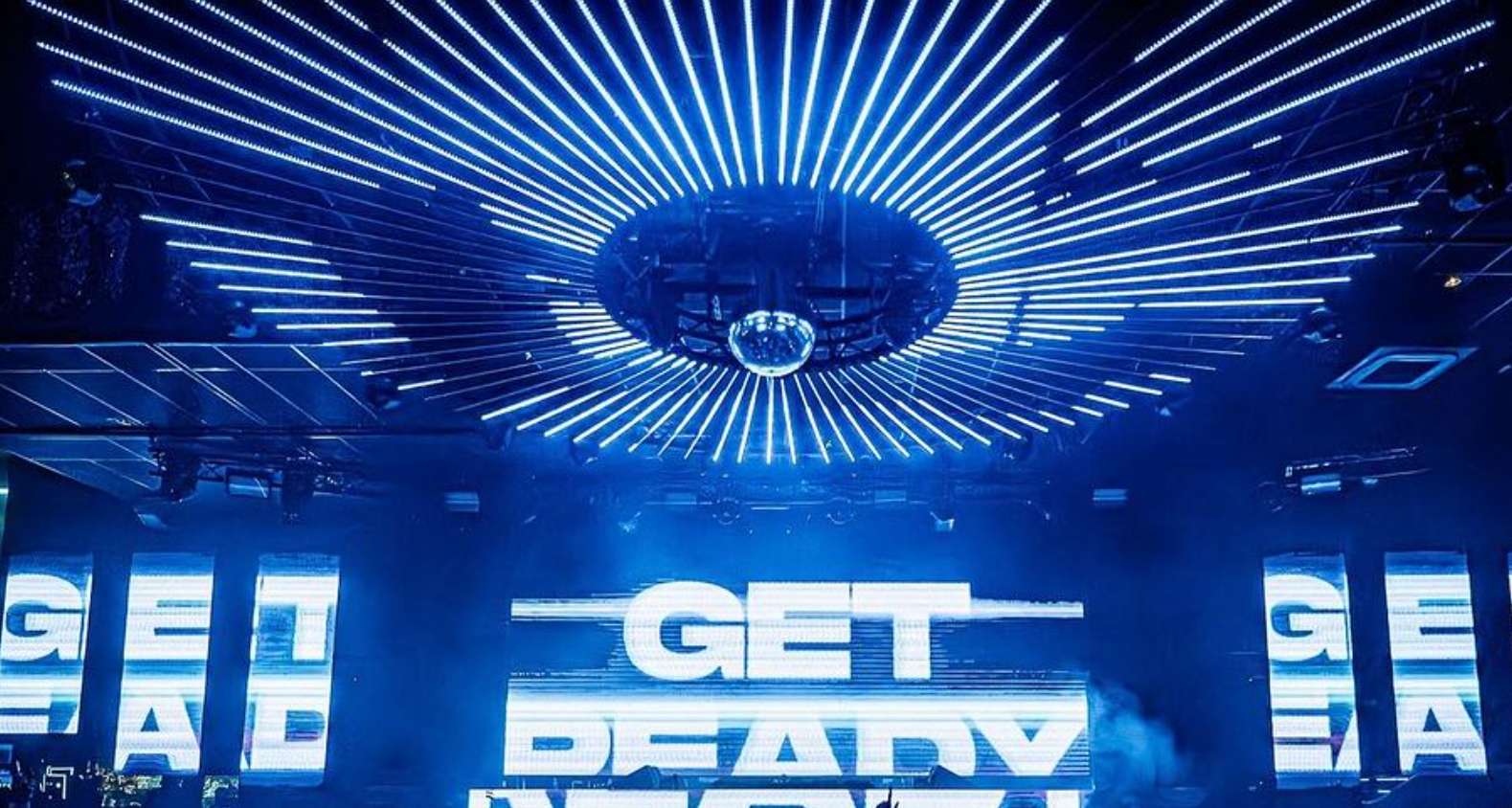
A venue of that scale needs lighting to match. Epic uses the most advanced club lighting available today — and that includes a centerpiece LED pixel installation that has become the defining visual of the space.
The Sun Circle: 80 Segments, 5 Meters Wide #
The focal point of the main room is a massive circular structure mounted in the center of the ceiling. It is 5 meters in diameter and built from 80 individual addressable LED pixel strip segments, each 2.5 meters long, arranged radially like the rays of a sun.
That’s a lot of pixels — and every single one is individually controllable. The circle can display smooth color sweeps radiating outward from the center, hard-edge patterns rotating around the ring, or full video content mapped across the entire surface. At 5 meters wide, it dominates the room visually from every angle on the dance floor.
The structure isn’t just decorative. It is the element that unifies the space — a single object that every guest sees, every photo captures, and every video from the club includes. It is what makes Epic look like Epic.
Resolume Arena + LED Strip Studio + Spout #
The control architecture at Epic is built around three tools, each doing what it does best.
Resolume Arena handles all visual content creation and playback. The VJ builds and plays video content in Arena — it’s the industry standard for that job, and Epic’s operators know it well.
LED Strip Studio software handles the LED pixel mapping. The 80 radial segments of the sun circle are mapped on a 2D canvas in LED Strip Studio, with each segment placed exactly as it is physically installed. Effects and video content then play correctly across the full circular geometry.
The connection between the two programs runs over Spout — a technology that allows real-time video sharing between independent software on the same Windows PC. Spout passes the video output from Resolume directly into LED Strip Studio with virtually zero latency. This means the addressable LED pixel strips on the circle stay in perfect sync with the LED pixel walls around the room — both driven from the same Resolume session, with no delay between them.
This is the cleanest possible architecture for a large nightclub LED installation: the best video tool for content, the best pixel mapping tool for the LED layout, and a zero-latency bridge between them. The LEC3 LED controller devices handle the final step — converting the mapped pixel data to SPI signals and distributing it across the segments of the circle.
The Floor: A Lesson Learned #
Epic originally also installed addressable LED pixel profiles in the floor — an ambitious idea that would have made the entire dance floor a live pixel surface. In practice, it didn’t work out. Regular floor cleaning introduced water into the profiles over time, causing damage. The floor installation was eventually removed.
The lesson here is real: outdoor-rated (IP67 LED strip) protection and sealed profiles matter in any environment where moisture is a risk. Floor installations in high-traffic venues face conditions that wall and ceiling installations simply don’t. If you’re planning a floor LED installation, the waterproofing spec needs to be treated as a structural requirement, not an optional upgrade.
One Object That Defines a Venue #
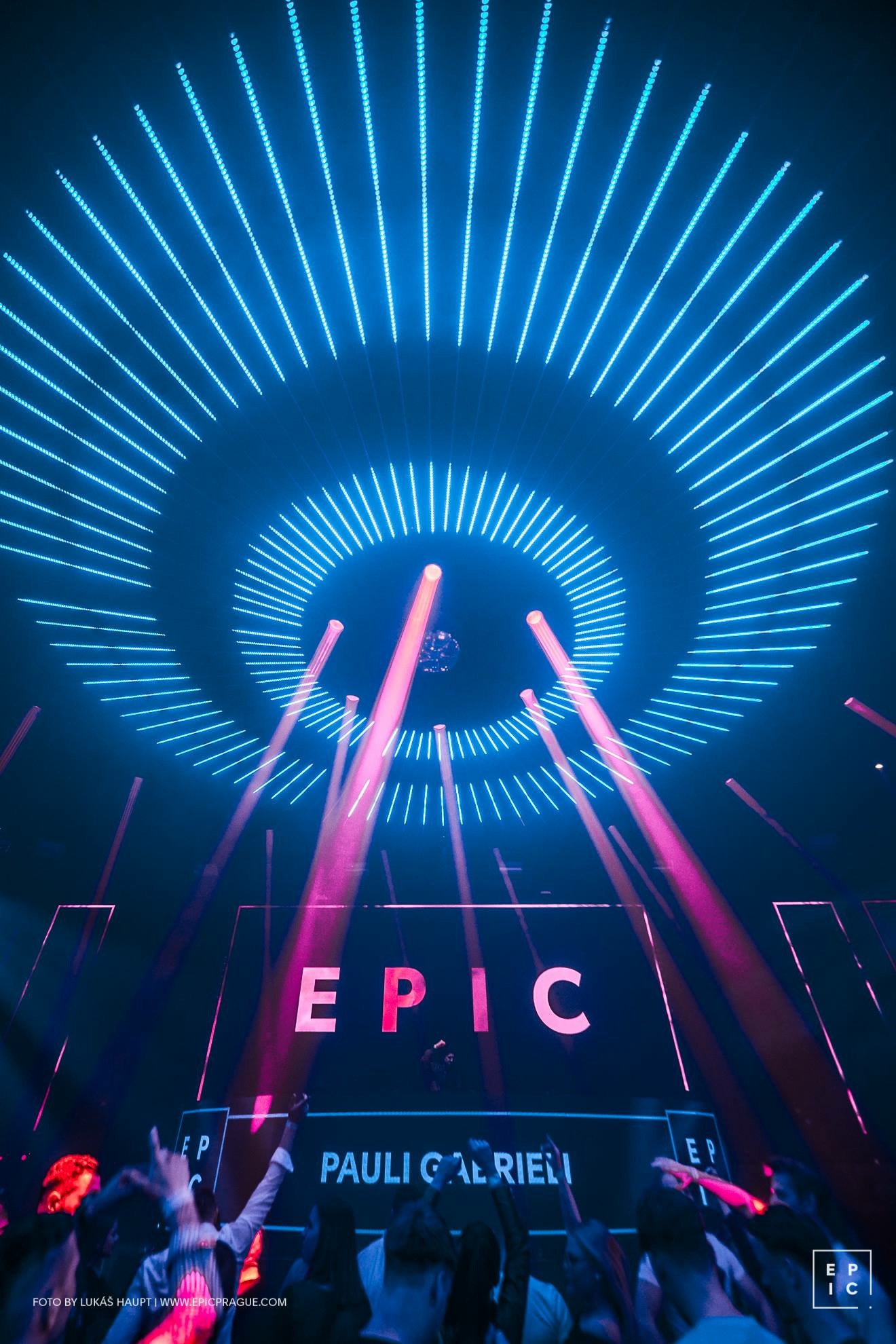
Every great club has a signature element — the one thing that shows up in every photo, every social media post, every mention of the place. For Epic Prague, that element is the sun circle.
When any footage from Epic appears online, the circle is in it. It has become synonymous with the venue. Guests who have never been there recognize it immediately. That’s not an accident — it’s the result of building something visually distinctive enough to carry that weight.
Addressable LED pixel strips are uniquely suited to creating that kind of signature object. Because the pixels are individually controllable and can be mapped to any shape, a circle, a hexagon, a custom logo — any geometry can become a dynamic LED display. LED Strip Studio and LEC3 controllers make the mapping and playback straightforward, even for complex custom structures.
If you want your venue to be remembered, give it something worth remembering.
Frequently Asked Questions #
How does Spout connect Resolume Arena to LED Strip Studio?
Spout is a Windows technology that lets two software applications share video frames directly in GPU memory — no encoding, no network, no file transfer. In the Epic setup, Resolume Arena outputs its visual content to a virtual Spout sender. LED Strip Studio runs as a Spout receiver and captures that frame in real time. The latency is near zero because the data never leaves the GPU. This keeps the addressable LED pixel strips on the circle perfectly in sync with the LED walls running from the same Resolume session.
What is LED pixel mapping and how does it work for a circular installation?
LED pixel mapping is the process of telling your control software where each physical LED is located in space. In LED Strip Studio, you place each strip segment on a 2D canvas that matches your real installation. For the Epic sun circle, all 80 radial segments are drawn on the canvas in the correct positions and angles. Once mapped, any video or effect playing in the software displays correctly across the full circular geometry — effects radiate outward, rotate around the ring, or sweep across the surface exactly as they appear on screen.
What LED controller is used to drive large nightclub pixel installations?
The LEC3 LED controller is a professional SPI pixel controller that converts pixel data from LED Strip Studio into SPI output signals for the physical strips. It connects over Ethernet, supports multiple SPI output channels, and handles large pixel counts across multiple universes. For a venue like Epic with 80 strip segments, multiple LEC3 units are networked together, each driving a subset of the installation. They synchronize automatically through the software.
Why did the floor LED installation fail, and how do you avoid it?
The floor installation at Epic used addressable LED pixel profiles that were not adequately sealed against moisture. Regular cleaning with water found its way into the profiles and damaged the electronics over time. The fix for future floor installations is to specify IP67-rated LED strip (fully submersible protection) and use fully sealed, gasketed aluminum profiles with waterproof end caps. Treat floor installations like outdoor installations — because in terms of moisture exposure, they face similar conditions.
How do you sync LED pixel strips with LED walls in the same venue?
The cleanest method — used at Epic — is to run both from the same Resolume Arena session. The LED walls receive video directly from Resolume’s display output. The LED pixel strips receive the same content via Spout into LED Strip Studio, which maps it onto the physical pixel layout. Because both paths start from the same frame in Resolume, they are inherently synchronized. No separate timeline or trigger system is needed to keep them in step.
What makes a pixel LED installation a venue's signature element?
A signature element needs to be visually distinct, consistently present in every part of the space, and impossible to replicate cheaply. Addressable LED pixel strips are ideal for this because they can be shaped into any custom geometry — a sun circle, a hexagon grid, a custom logo outline — and then animated dynamically. Static art installs go unnoticed after a few visits. A pixel LED installation changes every night, every set, every hour. That combination of distinctive shape and constantly changing content is what makes guests photograph it, share it, and associate it permanently with your venue.